EV Charger Installation at home can make daily charging far more convenient. Instead of relying only on public stations, homeowners can recharge overnight and begin each day with their vehicle ready for normal travel. However, selecting the right charger involves more than mounting equipment on a garage wall. Your electrical panel, available capacity, circuit requirements, charger location, and driving habits should all be considered before installation begins.
South West Electric can help Stafford homeowners and businesses evaluate these requirements before new charging equipment is installed. A professional assessment can determine whether the existing electrical system can support the charger, what type of circuit is required, and whether additional panel work should be considered.
Why Install an EV Charger at Home?
Home charging gives EV owners more control over when and where their vehicles recharge.
Level 1 charging uses a standard household outlet and may be suitable for drivers who travel shorter distances. Level 2 equipment uses a 240-volt circuit and provides substantially faster charging, making it a common choice for homeowners who rely on their EV every day.
A professionally installed charger can work well for:
- Daily commuters
- Multi-EV households
- Homeowners who drive longer distances
- Businesses providing employee charging
- Apartments and multifamily properties
- Fleet vehicles
The best charger depends on your vehicle, available electrical capacity, parking location, and preferred charging speed.
Choosing Between Level 1 and Level 2 Chargers
Understanding charger types is an important first step.
Level 1 Charging
Level 1 equipment generally uses an existing standard outlet. Installation requirements may be relatively simple, but charging is slower.
It may be practical for drivers who travel limited distances or have long periods available between trips.
Level 2 Charging
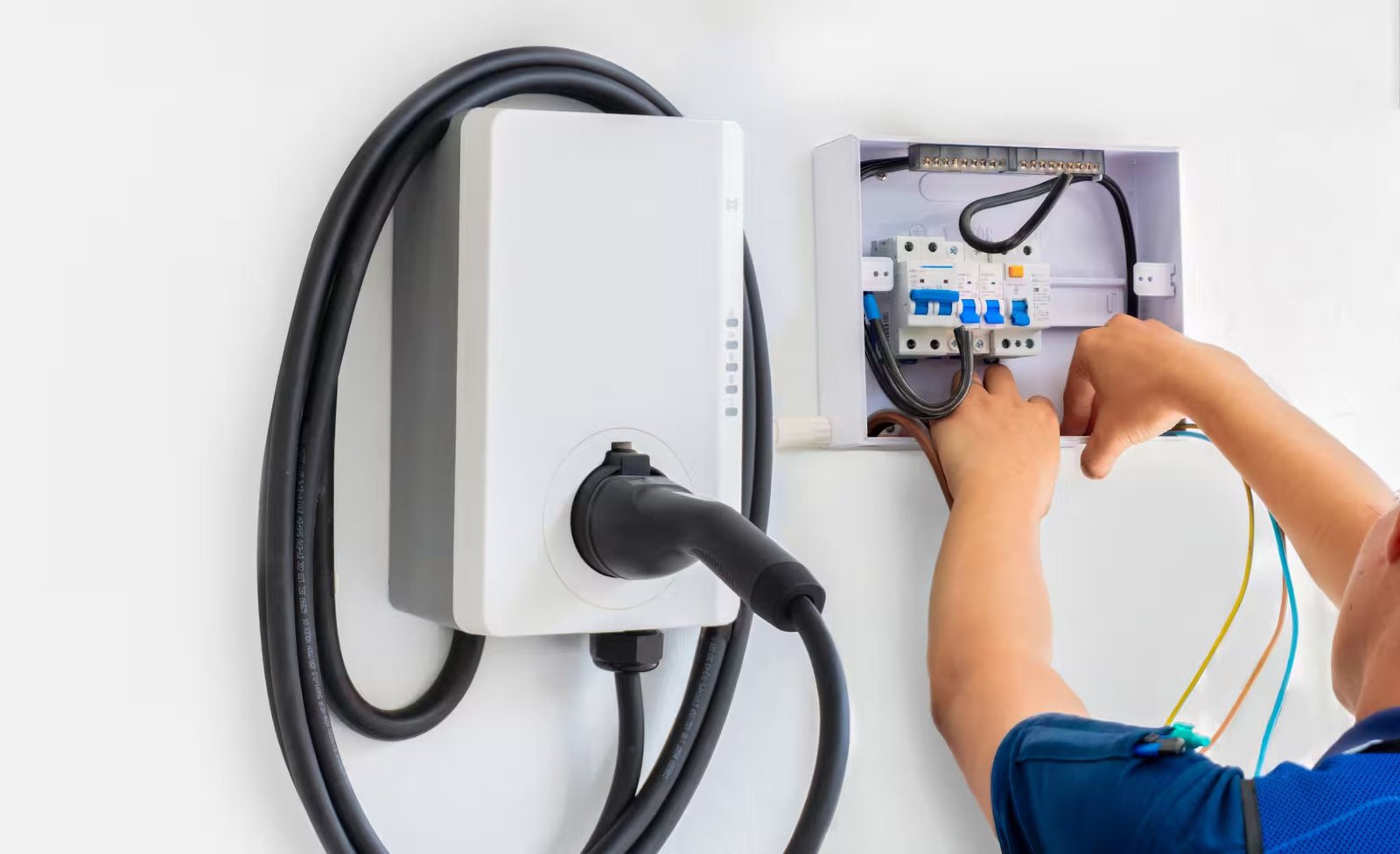
Professional Level 2 EV charger installation in Manvel TX requires a dedicated 240-volt circuit.
The charger may be hardwired or connected through an appropriate receptacle depending on the equipment and project design. Level 2 charging is generally better suited to drivers who want to recharge significantly faster at home.
Smart EV Chargers for Stafford Homes
Smart chargers add connected features beyond basic vehicle charging.
Smart chargers in Stafford may allow homeowners to schedule charging, monitor electricity use, adjust settings through an app, or manage access to the charger.
These features can be useful when households want to track charging habits or control when electricity is being used.
Before choosing a smart charger, consider vehicle compatibility, Wi-Fi availability, charging needs, and whether the additional connected functions will actually be useful.
Check Your Electrical Panel First
A Level 2 charger can place a significant new load on the home’s electrical system.
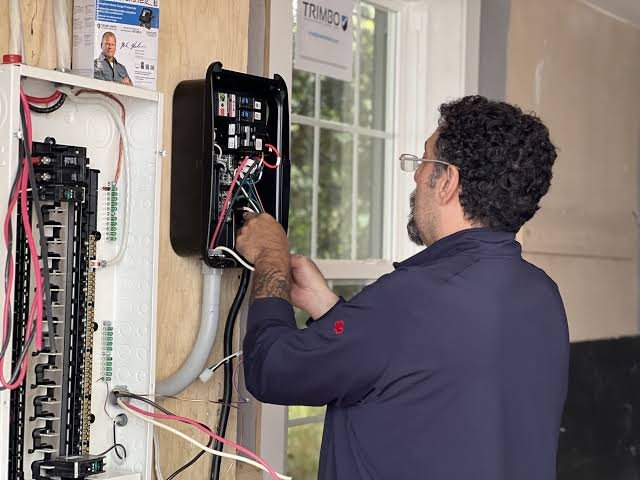
Before installation, an electrician should evaluate the main panel, available breaker space, grounding, service capacity, and existing household electrical demand.
Important loads may include:
- Air conditioning
- Electric water heaters
- Ovens and ranges
- Laundry equipment
- Pool equipment
- Workshop circuits
- Other large electrical appliances
If the existing service does not have enough capacity, the project may require a panel upgrade, service modification, or another load-management solution.
How Professional EV Charger Installation Works
A successful installation begins with an electrical assessment rather than simply choosing the highest-powered charger available.
The electrician first evaluates the panel and parking location. A load calculation is then used to understand how much electrical capacity the property already uses.
Next, the contractor plans:
- Charger location
- Circuit size
- Breaker requirements
- Wiring route
- Conduit
- Mounting
- Electrical connections
Longer distances between the electrical panel and parking area may require additional cable, conduit, wall access, or trenching.
After installation, the system should be tested for proper voltage, grounding, circuit protection, and charging operation.
Outdoor EV Charger Installation
Not every EV is parked inside a garage.
Chargers can also be installed near driveways, carports, or commercial parking spaces when the equipment and installation method are suitable for outdoor conditions.
Outdoor installations require careful consideration of weather exposure, secure mounting, conduit, wiring protection, and equipment ratings.
The source material specifically notes that outdoor charging equipment should be suitable for heat, moisture, and weather exposure.
This is especially relevant for Stafford properties where charging equipment may remain exposed year-round.
Commercial EV Charger Installation
Businesses may have different requirements from homeowners.
Commercial EV charger installation in Stafford may involve several charging points, larger electrical capacity, network controls, signage, parking considerations, and potentially payment or access-management features.
Commercial charging can be useful for:
- Offices
- Apartment communities
- Retail properties
- Fleet operations
- Employee parking
- Multifamily developments
Planning future expansion during the initial design stage may also help businesses avoid repeating major electrical work later.
What Affects EV Charger Installation Cost?
There is no single installation price for every property.
The original project draft identifies charger type, wiring distance, electrical panel condition, permit requirements, mounting location, and outdoor work as important cost factors.
Additional costs may arise when the project requires:
- Long wiring routes
- Trenching
- Panel upgrades
- Electrical service changes
- Wall repairs
- Outdoor conduit
- Multiple chargers
A written quote should clearly separate equipment, labor, materials, permits, testing, and any potential electrical upgrades.
Conclusion
Professional EV charger installation in Stafford, TX starts with understanding the vehicle, property layout, charger requirements, and available electrical capacity. A site assessment and load calculation can help determine whether the existing panel can support a Level 2 charger or whether additional electrical work should be considered.
South West Electric can help homeowners and businesses plan charger placement, electrical requirements, panel preparation, dedicated circuits, and installation details. A carefully planned project can provide convenient home or commercial EV charging without choosing equipment that exceeds what the property’s electrical system can reasonably support.
FAQs
Who installs EV chargers in Stafford, TX?
A qualified electrical contractor can install residential or commercial EV charging equipment. The contractor should evaluate the electrical service, install the required circuit, mount the charger, and test the completed installation.
Is a Level 2 EV charger better for home use?
Level 2 charging is often more practical for drivers who need faster overnight charging. It requires a dedicated 240-volt circuit and sufficient electrical capacity.
Will I need an electrical panel upgrade?
Not necessarily. An electrician should inspect the panel and perform a load calculation first. Some properties may have enough existing capacity, while others may need an upgrade or load-management solution.
Can an EV charger be installed outside?
Yes, when appropriate outdoor-rated equipment, wiring methods, mounting, and protective components are used.
Do EV charger installations require permits?
Requirements depend on the specific property and scope of work. New circuits, panel changes, or outdoor wiring may require permits and inspections.