Charging an electric vehicle at home can make daily driving easier, but the installation should be planned around more than the charger itself. The vehicle, electrical panel, available capacity, parking location, cable reach, and expected charging speed all influence how the system should be set up.
Professional EV Charger Installation in Fresno, TX gives homeowners an opportunity to evaluate these details before new electrical equipment is connected. South West Electric provides electrical services that include EV charging equipment, panel work, and other residential electrical improvements.
Match the Charger to Your Driving Routine
Not every EV owner needs the same charging setup.
Drivers who travel only a short distance each day may have different requirements from homeowners who regularly commute long distances or need to recharge a larger battery overnight.
Before selecting charging equipment, consider:
- Vehicle make and model
- Battery capacity
- Typical daily mileage
- Overnight charging time
- Number of electric vehicles
- Garage or driveway location
- Future charging needs
- Available electrical capacity
Planning around actual vehicle use can help homeowners choose a practical system instead of simply selecting the highest-powered charger available.
Understand Level 1 and Level 2 Home Charging
Residential EV charging is commonly discussed in terms of Level 1 and Level 2 charging.
Level 1 charging typically uses a standard household electrical outlet. It may be suitable for some drivers, but charging is generally slower.
Level 2 charging operates at a higher electrical capacity and can provide faster charging for many electric vehicles.
The appropriate option depends on the vehicle and how quickly the battery needs to recover after daily driving.
Homeowners who regularly use most of their available driving range may find Level 2 charging more practical for overnight use.
Evaluate the Electrical Panel Before Installation
The home’s electrical system needs to be reviewed before a higher-powered EV charger is added.
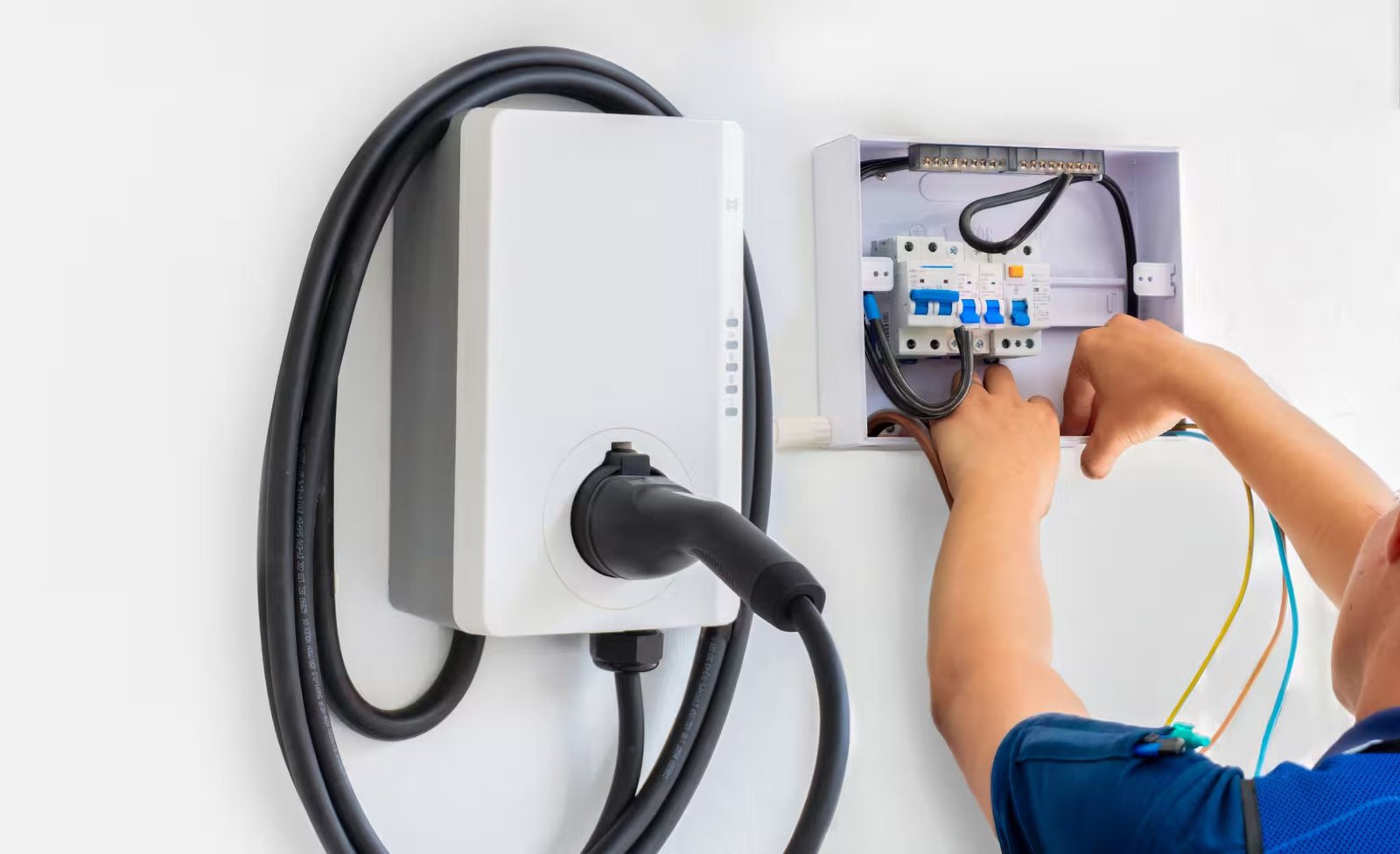
During home EV charger installation in Fresno, TX, an electrician can inspect the electrical panel and determine whether the system has suitable capacity for the additional load.
The review may include:
- Available breaker positions
- Main service capacity
- Existing household electrical demand
- Panel condition
- Charger specifications
- Other high-demand appliances
Homes may already have significant electrical loads from air conditioning, dryers, electric ranges, water heaters, pools, or other equipment.
An EV charger adds another electrical demand that should be considered as part of the overall system.
A Panel Upgrade Is Not Always Required
Some homeowners assume installing an EV charger automatically means replacing the electrical panel.
That is not always the case.
An electrician should first evaluate the existing panel, service capacity, and expected charger load.
If adequate capacity and breaker space are available, the existing equipment may be suitable.
In other situations, electrical modifications or a panel upgrade may be recommended before installation.
The decision should be based on the condition and capacity of the home rather than assuming every EV charging project requires the same electrical work.
Plan a Dedicated EV Charging Circuit
Many Level 2 charging installations use a dedicated electrical circuit.
A dedicated circuit allows the charger to operate independently rather than sharing its electrical load with unrelated household devices.
Professional EV charging station installation in Fresno, TX should consider the charger’s electrical requirements before the circuit is designed.
Important details can include:
- Charger amperage
- Breaker size
- Wiring requirements
- Distance from the panel
- Conduit needs
- Indoor or outdoor placement
- Mounting location
- Equipment specifications
These details can influence both project complexity and installation cost.
What Can Affect EV Charger Installation Cost?
Installation costs vary because every property has a different electrical layout.
Common cost factors include:
- Charger type
- Electrical panel capacity
- Wiring distance
- Circuit requirements
- Breaker installation
- Conduit
- Wall or exterior access
- Outdoor installation requirements
- Electrical upgrades
- Mounting complexity
A charger located close to an adequately sized electrical panel may involve a different scope from one requiring a long circuit run or panel improvements.
An on-site assessment provides a clearer project estimate.
Choosing an EV Charger Electrician in Fresno
Homeowners should look for an electrician who evaluates the entire electrical setup rather than focusing only on mounting the charger.
Ask whether the contractor will inspect the panel, review electrical demand, verify charger requirements, plan a dedicated circuit, and test the equipment after installation.
It is also helpful to discuss whether future charging needs should influence the current setup.
South West Electric provides electrical services involving EV charging and panel-related work for Fresno-area homeowners.
Clear planning before installation can help reduce unnecessary changes once the project begins.
Conclusion
A reliable home charging setup starts with understanding the vehicle and the home’s electrical system.
Professional EV Charger Installation in Fresno, TX should consider charging speed, panel capacity, circuit requirements, wiring distance, parking location, and future EV needs before equipment is installed.
Homeowners also researching EV Charger Installation in Bellaire TX can apply the same planning principles when comparing residential charging options.
For homeowners in Fresno, South West Electric can assist with EV charging equipment, electrical circuits, panel-related work, and other electrical improvements needed to support convenient at-home charging.
Frequently Asked Questions
Does every electric vehicle need a Level 2 charger?
No. Some drivers can meet their daily charging needs with Level 1 charging, while others prefer Level 2 equipment for faster overnight charging.
Will I need a new electrical panel for an EV charger?
Not necessarily. An electrician should inspect the existing panel, available breaker space, and electrical capacity before recommending an upgrade.
Does a Level 2 charger need its own circuit?
Many Level 2 installations use a dedicated circuit based on the charging equipment and electrical requirements.
Can an EV charger be installed outside?
Yes. Outdoor installations are possible when suitable equipment and electrical installation methods are used for exterior conditions.
What determines the cost of EV charger installation?
Charger requirements, panel capacity, wiring distance, circuit size, conduit, mounting location, outdoor exposure, and required electrical upgrades can all affect project cost.